
1981 West Washington Street Mural
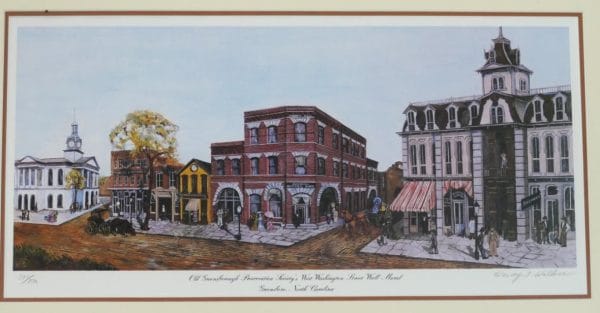
In the winter of 1980, a chipped and peeling wall at the intersection of South Elm and West Washington Streets was identified by the Historic Preservation Committee of the Old Greensborough Preservation Society as a potential beautification site. Plans were soon drawn up to transform the location into something that better reflected the Greensboro community: a mural of multiple historically and architecturally important buildings in Greensboro from the late 1800s, as well as a small adjacent park area designed by city landscape architects.
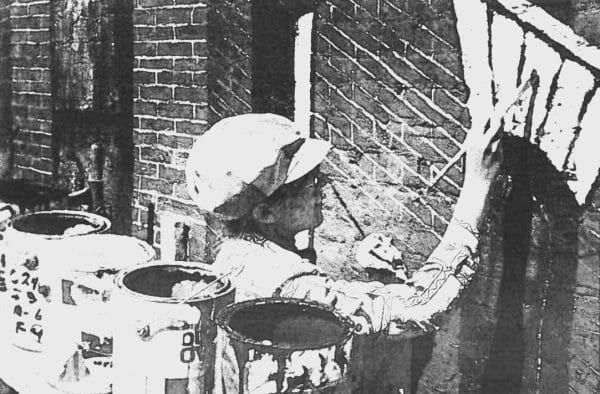
This design was chosen in the hopes it would inspire further preservation of historical buildings downtown and a stronger feeling of connection between Greensboro’s past and present. Local artist Wendy Wallace, as well as many other volunteer artists, the president of Naegele Outdoor Advertising Company, Dick Marlowe, and the entire Greensboro community, poured hours, weeks of energy, and dozens of gallons of paint into completing this project.
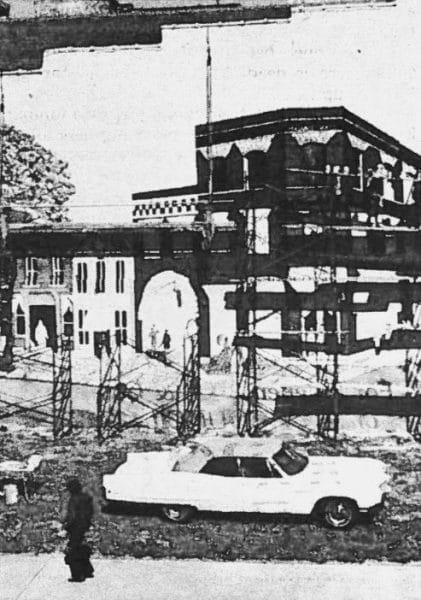
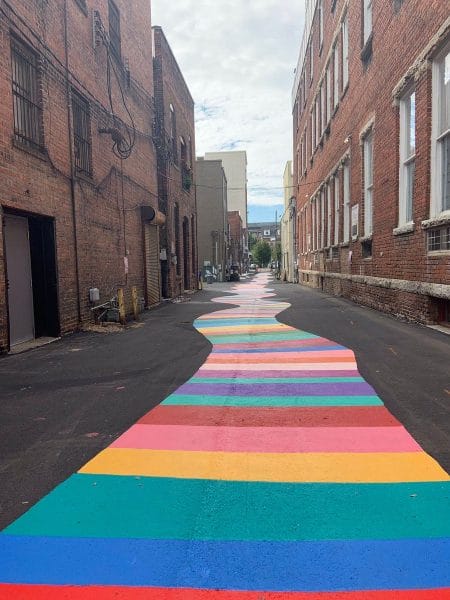
It was finally finished and dedicated via a ribbon-cutting ceremony on November 15, 1981. The following year, Greensboro Beautiful and the Serendipity Garden Club were tasked with executing the landscaping designs created for the nearby park area, including benches, lighting, planters, and an information kiosk. Today, the area still sports an artistic flair as the home of the Rainbow Alley mural on 111 West Washington Street.
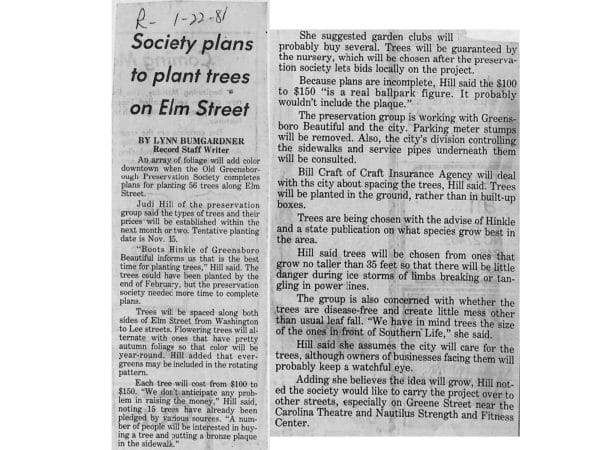
1981 South Elm Street Tree Plantings
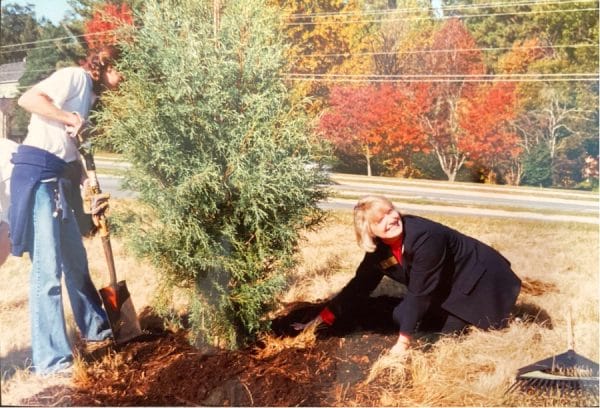
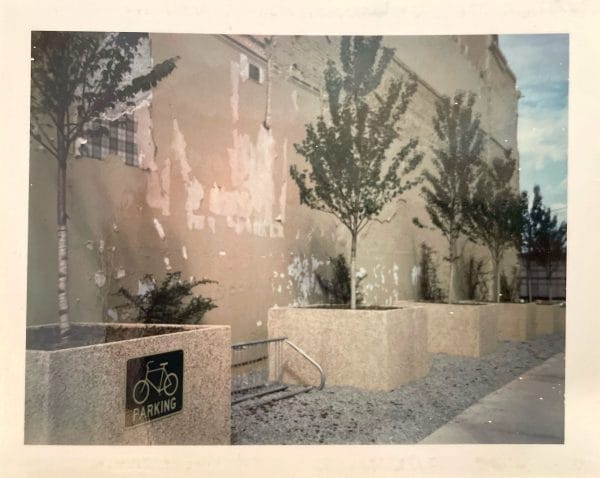
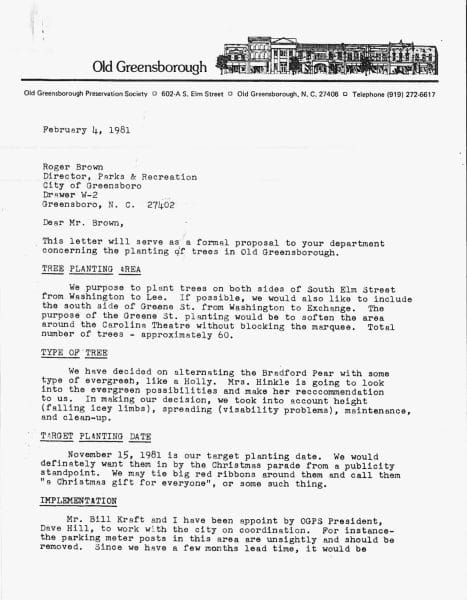
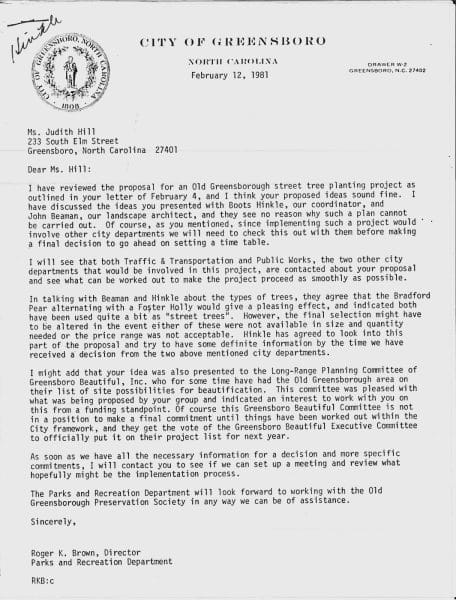
In February 1981, Judi Hill, Chair of the Old Greensborough Preservation Society Tree Committee, sent a letter to Roger Brown, director of Greensboro Parks and Recreation, proposing a tree planting along both sides of South Elm Street from West Washington to Lee (now East Gate City Boulevard). She requested collaboration between the tree committee, the Parks and Recreation Department, City Beautiful Coordinator Boots Hinkle, and other city officials on the project. A committee from Greensboro Beautiful became involved in the following weeks as a sponsor and agreed to match the funds raised to pay for the trees and other necessary materials. Sometime in the fall of 1981, these plans came to fruition, and around 55 trees were planted down South Elm Street, alternating between Bradford pears and live oaks. 26 of these trees were donated by Greensboro Beautiful, and many others were gifted by garden clubs and citizens who received plaque recognition.
1991 Greensboro Arboretum
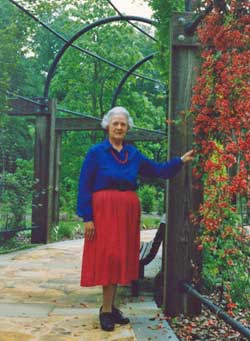
Following the dedication of the Bicentennial Garden in 1976, Greensboro Beautiful and Greensboro Parks and Recreation began discussing the possibility of other public gardens projects. In the early 1980’s, a committee was formed, advised by landscape architect and horticulture professor, Robert McDuffie of Virginia Tech, to create a master plan for what would become the Greensboro Arboretum. The proposed area was formerly the Anniversary Garden, a project of the Greensboro Council of Garden Clubs, who had been a partner of Greensboro Beautiful since its inception. Former Greensboro Beautiful co-chair Irene McIver became involved with the project when she passionately offered her vision for the Arboretum. Going forward, she became instrumental in making it a reality.
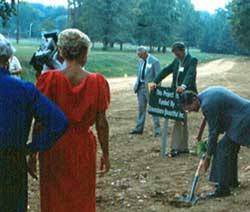
On October 2, 1986, a groundbreaking ceremony was held, and on May 19, 1991, the 17-acre garden was completed and dedicated to the City of Greensboro. Since then, a number of special garden areas have been added for public education and wildlife habitat.
1991 Bog Garden Opens:
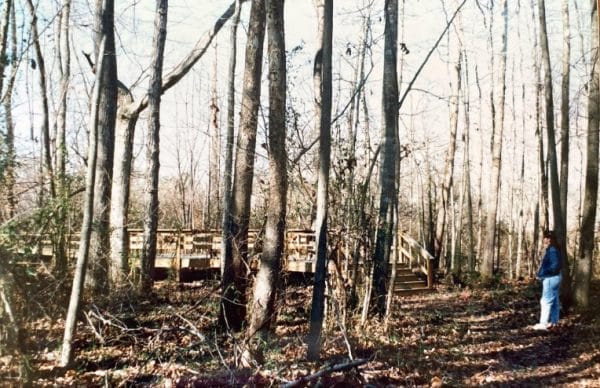
In 1987, retired physician Dr. Joe Christian was walking in the Bicentennial Garden with his wife and noticed a fairly large bass swimming downstream. He followed it into Starmount Farms property and discovered a wetland area and lake that had been owned by Blanche Sternberger Benjamin ever since her husband and the founder of Starmount Company, Edward Benjamin, passed away in 1980. In November 1987, Blanche generously donated the land and lake Dr. Christian had stumbled upon to the city, and in 1988, Dr. Christian began drawing plans and working with city departments in the hopes of transforming the area into a bog garden. For the next few years, Dr. Christian worked with Greensboro Beautiful, City staff, private donors and sponsors, local nurseries, and numerous volunteers to fundraise, renew the lake and dam, install raised wooden walkways, stone steps, and observation decks, and plant thousands of shrubs, trees, and flowering plants across the bog garden. On July 8, 1991, the 7-acre bog garden was completed and dedicated to the City of Greensboro. Dr. Christian continued to be involved in upkeep until 1995, and in the 2000s, two projects, a 150-foot man-made waterfall and a bronze statue of his likeness, were undertaken to honor him and his many, many hours of dedication to the garden.

Dr. Joe Christian’s statue at the entrance of the Bog
1993 Lake Daniel stream restoration and planting
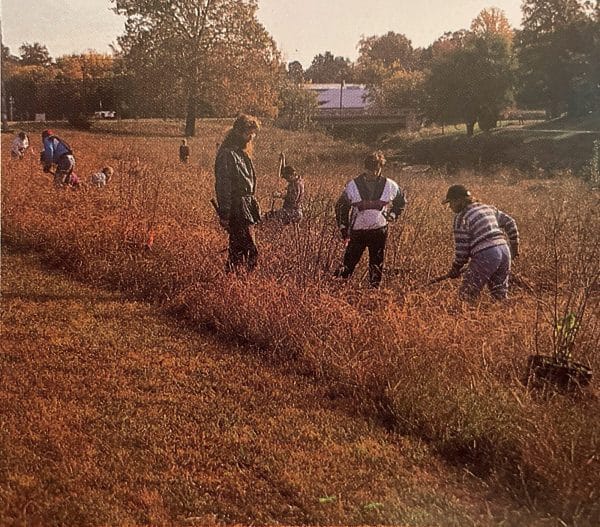
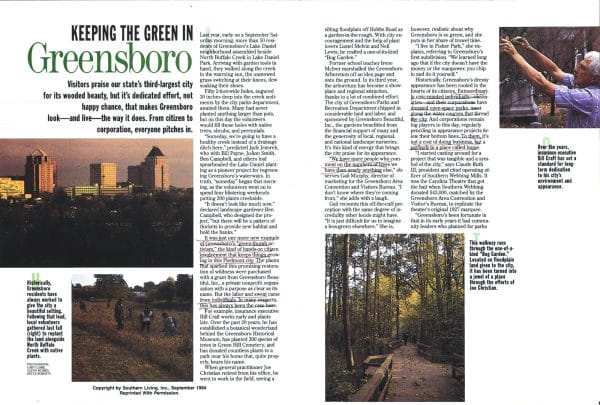
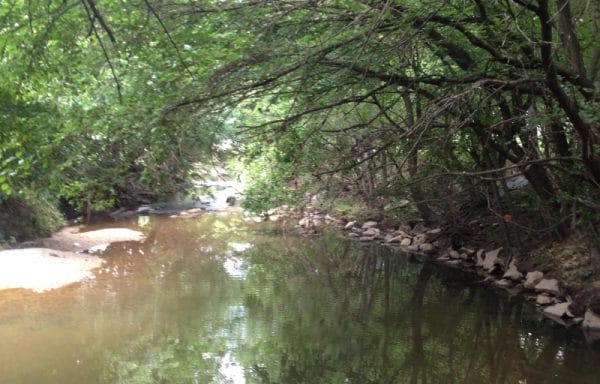
Early on a Saturday morning in September, 1993, residents of Greensboro’s Lake Daniels community gathered at North Buffalo Creek nearby Lake Daniels Park. They were around 50 strong, all volunteers, and ready to get to work planting native trees, shrubs, and perennials for the next few hours and following weekends. A total of 200 trees were planted in the hopes that the new plants would encourage habitation and restoration of the North Buffalo Creek, all of which were sponsored by Greensboro Beautiful.
2001 Caldwell Park Reforestation Project
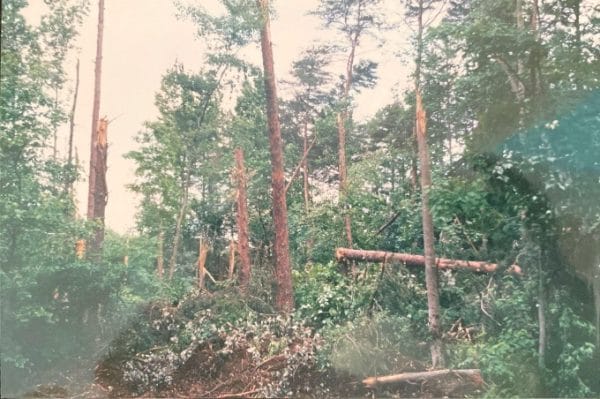
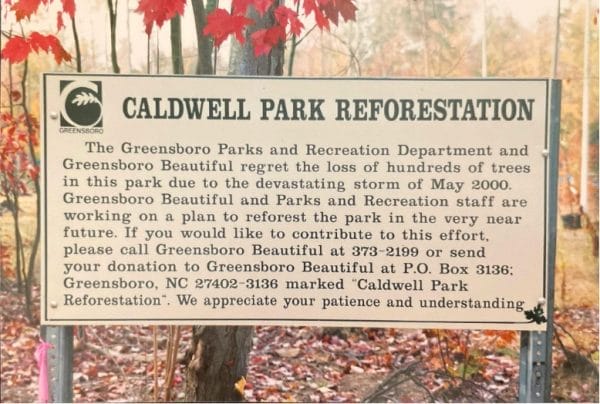
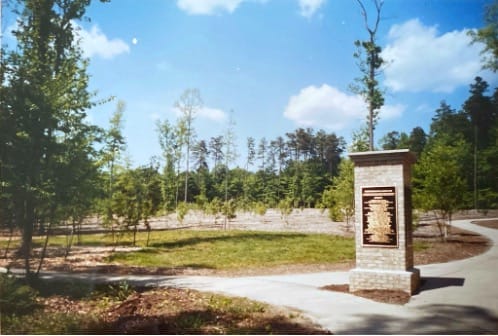
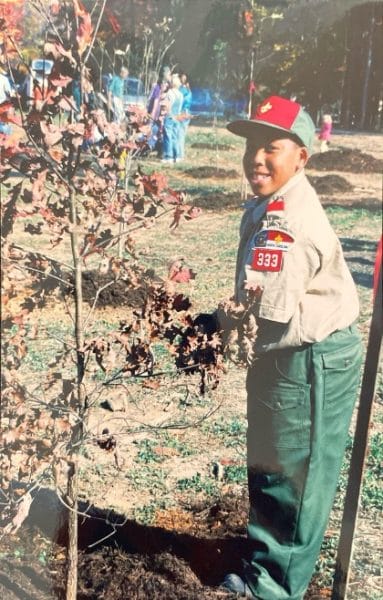
In May 2000, a devastating storm swept through the Greensboro area and brought down hundreds of trees in the David Caldwell historical park. The following year, Greensboro Beautiful and Greensboro Parks and Recreation undertook a project to reforest the area and replant the trees with the hopes of regenerating much of the canopy cover that had been lost. A committee was formed, and plans were soon put into motion. On November 3, 2001, over 200 volunteers, including Scouts, residents, city officials, and Greensboro Beautiful staff, came out for a community planting day. Remarks were given by Randal Romie, Chair of Greensboro Beautiful, and Keith Holliday, Greensboro City Mayor. Many people also sponsored trees to honor or memorialize loved ones, and those sponsors’ names are listed on the brick column located in the center of the park’s walkway.
2003 Price Park/New Garden Reforestation Effort
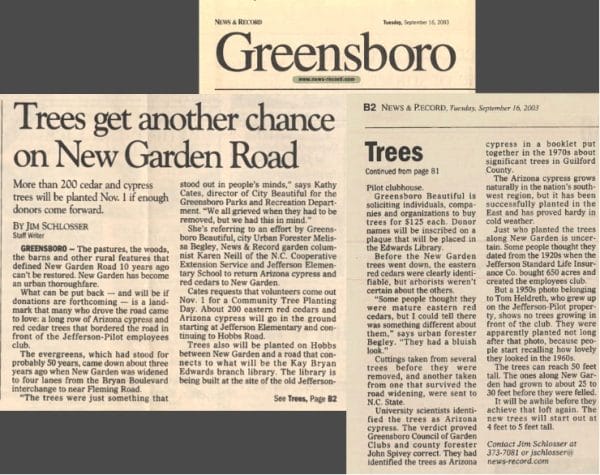
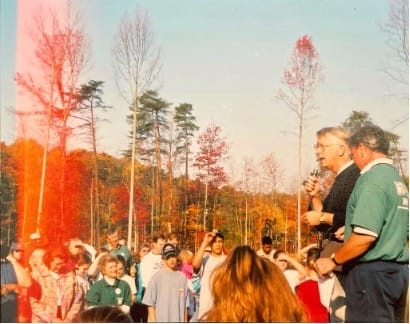
In the early 2000s, New Garden Road was expanding at a rapid pace, resulting in dozens of trees being felled to make room. Although the loss of these trees was disheartening, Greensboro Beautiful, Jefferson Elementary School, Greensboro Parks and Recreation, and other city officials collaborated to coordinate a volunteer-based community planting day in the future.
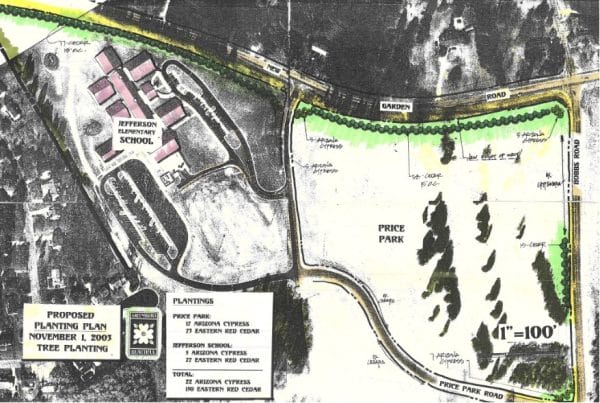
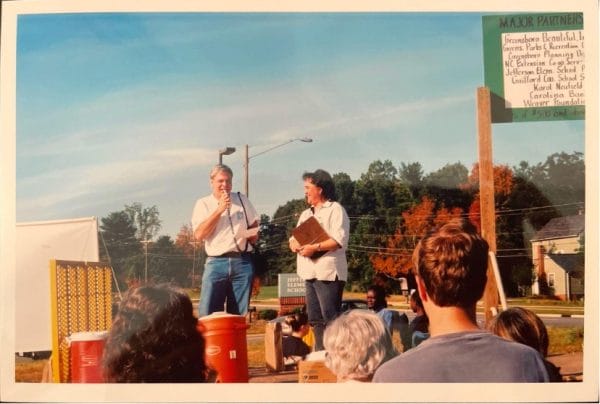
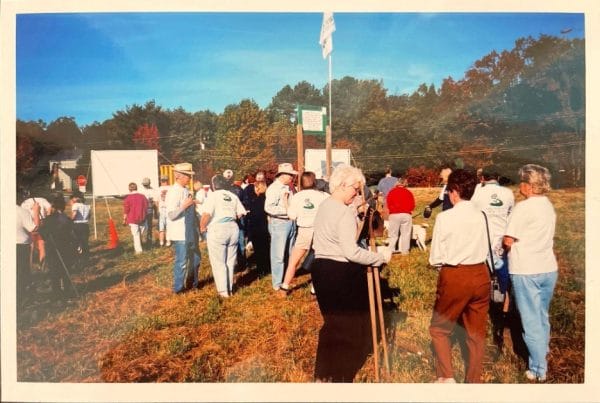
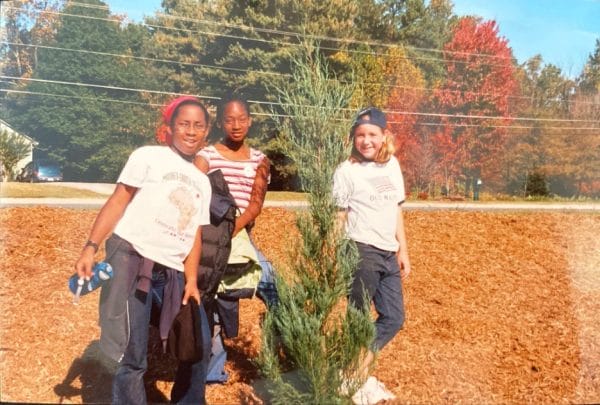
On November 1, 2003, hundreds of volunteers gathered at Price Park and Jefferson Elementary School to plant around 200 Arizona Cypress and Eastern Red Cedar trees along Hobbs Road. Speakers included chair of Greensboro Beautiful, Randal Romie, and the City Beautiful Coordinator, Kathy Cates. Many of the trees being planted that day had been sponsored by those wanting to honor and memorialize loved ones and friends, and the names of those generous donors were immortalized in bronze via plaques installed at the main entrance of the Kathleen Clay Edwards Branch Library in early 2005. These trees still line Hobbs Road today, and are a testament to the amount of effort that goes into keeping Greensboro green and beautiful.