
A History of Greensboro Beautiful, Inc.
Written by Kathy Cates and CJ Minor
Edited by Amanda Garner
Introduction:
Written by Kathy Cates
The Greensboro Council of Garden Clubs began doing beautification projects on public property in the 1930’s. Through the years, they planted weeping cherries on Bessemer Avenue and West Market Street medians and landscaped many, many other city-owned areas.
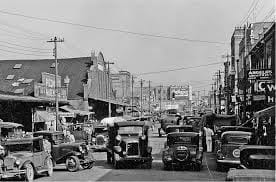
In 1954, the Greensboro Council of Garden Clubs and the Greensboro Jaycees joined forces for “Operation Dogwood”. Club members sold 14,500 the first year at fifty cents each. The project was repeated for the next four years, and in all, 31,358 trees were sold. We are called “The Dogwood City” to this day.
In March 1961, Clyde Greenway, Founder and Director of the Sears Roebuck & Company’s “HANDS” Program (Home and Neighborhood Development Sponsors) telephoned Donaldine Pringle, President of the Greensboro Council of Garden Club, to discuss their “HANDS” Program. At Clyde’s request, Donaldine set up a meeting with representatives from the Greensboro Chamber of Commerce, the City of Greensboro Parks & Recreation Department, the Greensboro Council of Garden Clubs, and Sears Roebuck & Company to explain the Program in detail.
Needless to say, we signed on. The Chamber, Garden Council, and Sears contributed $500.00 each as “seed money”. The Greensboro Parks & Recreation Department supplied the services of a part-time coordinator and helped with maintenance of the projects. A Board of Directors was formed, made up of a representative from each of the Sponsors and committee chairmen to handle details of the projects approved by the Board. The Council of Garden Clubs appointed the Board Chair. We were known as “City Beautiful”.
Mary Alice Brugh was our first City Beautiful Coordinator. She began working with us in 1961. Kitty Robison followed from 1962 to 1966. Boots Glasgow Hinkle was hired in 1966 and served until she retired from the City of Greensboro in 1988. Kathy Cates was hired as City Beautiful Director in 1988. She remained in this position until 2020 and managed a staff of three, including Lynne Leonard, City Beautiful Coordinator; Edith McNeal and Marty Stover, Administrative Assistants. After the COVID-19 pandemic, Margaret Winslow was contracted in the interim, and Amanda Garner is the current Executive Director, acting with support from the Greensboro Parks and Recreation department.

Historic Milestones, 1930-1979
Written by CJ Minor
1966-68 Grimsley High School Litter Bags
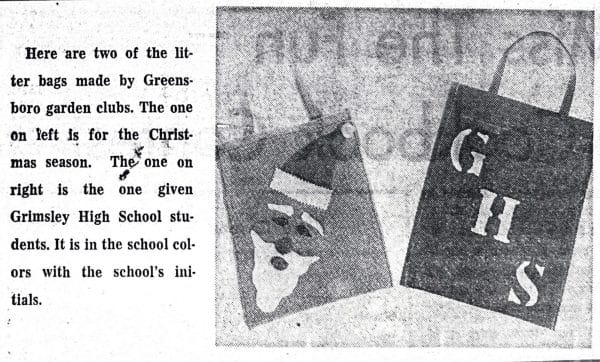
In late 1966, state anti-litter chair of the Garden Club of North Carolina, Dottie Wagoner approached school officials and the student beautification committee from Grimsley High School with an idea on how to prevent littering around their campus and Greensboro at large. She proposed handing out personalized litter bags for students to keep in their cars, complete with school colors and initials for an added touch of school spirit. Wagoner was met with excitement and positive feedback, leading her to recruit six garden clubs in the area who were willing to join the project as financers and crafters. Together, they created over 600 blue denim litterbags with white GHS letters stenciled on the front and presented them to the Grimsley student body. Every student who drove to school one or more days per week received a bag. Two years later, in 1968, Wagoner became chair of Greensboro Beautiful and revitalized her Grimsley High School litterbag project with four garden clubs and Greensboro Beautiful’s backing. She hoped to bring the project to other local high schools and emphasize the importance of keeping our roads clean.
1976 Tanger Family Bicentennial Garden Opens
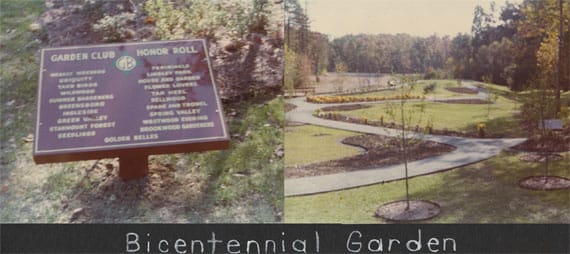
On October 21, 1976, the Bicentennial Garden was established and dedicated to the City of Greensboro. A time capsule was buried in the garden and is to be opened on October 21, 2076, 100 years after dedication to the City. In 2008, the Tanger Family donated 2 million dollars to Greensboro Beautiful, and it is now named the Tanger Family Bicentennial Garden in perpetuity.
1979 Greensboro Recycling Center
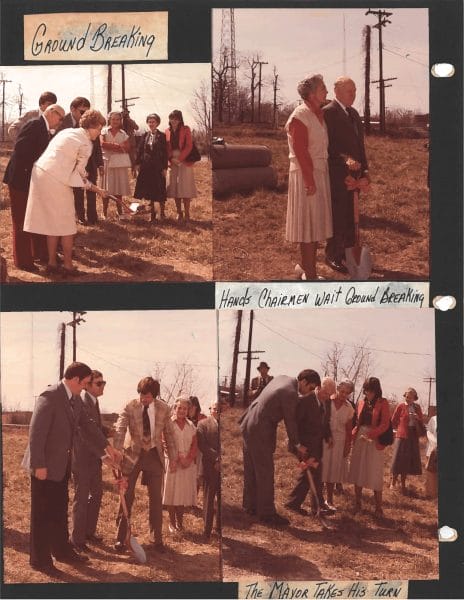
On March 19, 1979, a groundbreaking ceremony was held at the construction site of Greensboro’s new multi-purpose recycling center, located at 412 East Washington Street. The project had been years in the making and was only made possible through the collaborative efforts of Greensboro Beautiful, Greensboro Jaycees, and the NC Beer Wholesalers Association. The ceremony was attended by Greensboro’s mayor, Jim Melvin, as well as Irene and William McIver, co-chairs of Greensboro Beautiful from 1978-1980, and representatives from Greensboro Jaycees.
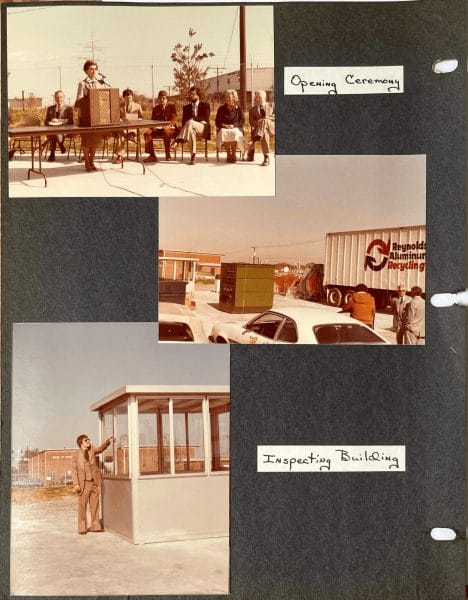
When the center eventually opened on November 16, 1979, Greensboro became the first city in the state of North Carolina to have such a facility. Residents could drop off paper, aluminum, and glass to be recycled, and even received twenty-three to twenty-five cents for every pound of aluminum brought in. The center ultimately closed in 1983, but during its time, over 100,000 pounds of recyclable materials were given new life and kept out of the landfill. The impacts of this project reduced waste, saved energy, and helped keep Greensboro a little more beautiful.